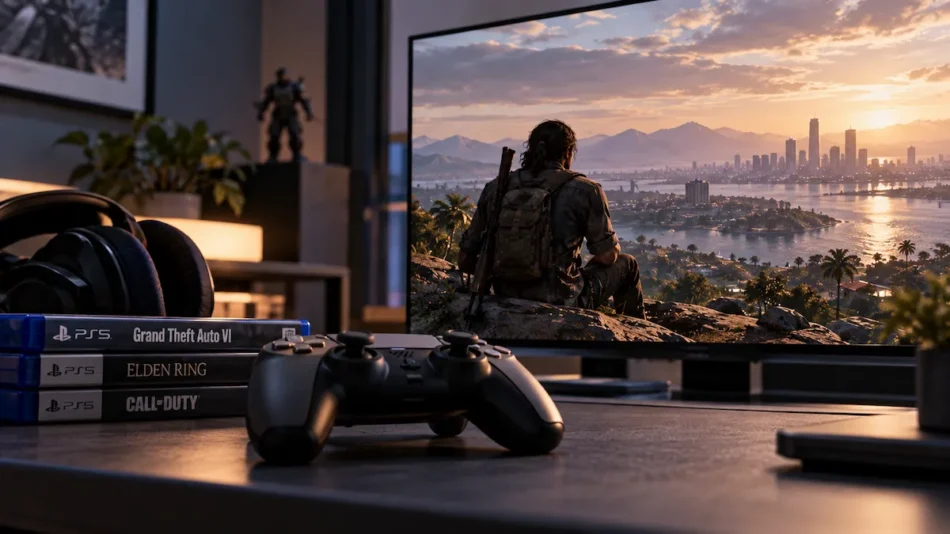
AAA game development costs are rising as major games become bigger, more detailed and more expensive to produce. Modern blockbuster games can take years to build and require hundreds of developers, artists, writers, designers and technical specialists.
The change is easy to notice when looking at modern releases. Games now feature huge open worlds, realistic characters, advanced lighting, detailed animations, complex physics and online systems that can remain active for years.
But there is another side to this progress. AAA game development costs are rising quickly, and publishers are under increasing pressure to recover that money.
So, why are AAA games becoming so expensive?
Why AAA Game Development Costs Keep Rising
One of the biggest reasons is development time.
A major AAA game is no longer something a large team can finish in two or three years. Many projects take five years or longer, especially when they involve a new game engine, a large open world or completely new technology.
Every additional year means more salaries, office expenses, software costs, testing and production work.
The development team also changes throughout the project. Early development may need more programmers and designers. Later stages can require large teams working on animation, testing, performance, voice acting and localization.
This means a game can continue generating costs long before it reaches a store.
Game Worlds Are Becoming Much Larger
Modern players expect more from AAA games.
Modern open-world games require immersive details like realistic vehicles, animations, interiors, dynamic weather, advanced NPC behavior, and expanded dialogue choices. Adding these features increases development workloads.
Expansive maps also require extensive testing to fix bugs across numerous locations and player interactions.
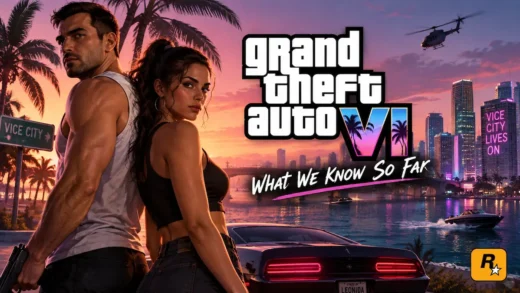
This is one reason games such as GTA 6 can require so much time and money. Take-Two has described GTA 6 as its most ambitious evolution of the series and expects the game to drive record levels of business around its launch.
Realistic Graphics Cost More
Rising graphic standards significantly drive up AAA game development costs.
Modern expectations for realistic environments, lighting, and physics demand large teams of artists and programmers. Building assets goes beyond simple models to include detailed facial animations, motion capture, hair and skin simulation, and voice performances for hundreds of in-game elements.
Optimizing these high-fidelity graphics to run smoothly across diverse hardware further escalates testing and development efforts.
Motion Capture and Voice Acting Add Up
Story-driven AAA games increasingly resemble major film productions.
AAA games hire professional actors for voice acting and motion capture, often recording thousands of dialogue lines.
Greater interactivity requires developers to account for multiple player choices and pathways.
This creates vast amounts of content, resulting in dozens of story hours and thousands of assets.
How Larger Teams Increase AAA Game Development Costs
Another important part of the cost is the size of modern development teams.
A major AAA project can involve programmers, artists, designers, writers, producers, testers, audio specialists, animators and technical experts.
Some developers also work with external studios.
This means the actual team behind a game can be much larger than the studio name shown on the box suggests.
Salary is a major expense for any software company. GDC’s 2025 salary report put the average US game industry salary at about $142,000, with a median of $129,000 among its respondents.
That does not mean every game developer earns those amounts, but it shows why maintaining large teams for several years can become extremely expensive.
AAA Development Is Also Getting Riskier
Higher costs would be easier to manage if every big game became a guaranteed hit.
The gaming industry offers no sales guarantees. Publishers risking growing budgets over years of development can still face commercial failure.
Highlighting this pressure, GDC’s 2026 State of the Game Industry report revealed that 28% of respondents were laid off in the past two years, with two-thirds of AAA studio respondents reporting layoffs.
When a project costs hundreds of millions of dollars, even a small commercial disappointment can have serious consequences.
Marketing Can Cost a Fortune Too
The development budget is only part of the story.
Publishers also have to market the game.
A major release may appear in television advertisements, online campaigns, gaming events, trailers, social media promotions and physical retail campaigns.
The biggest games compete for attention against hundreds of other releases.
This creates another problem. Spending more money on development does not automatically guarantee that people will notice the game.
A publisher may therefore spend heavily on both production and marketing.
Live-Service Games Add Another Layer
AAA games are also becoming more complicated because of online features.
A traditional single-player game can be completed and released. A live-service game needs continued support.
Developers may need to create new maps, characters, weapons, missions, events and seasonal content after launch.
Servers also require ongoing maintenance.
GDC’s 2025 industry survey found that 33% of AAA developers surveyed were working on live-service games. The same report also highlighted concerns around market saturation and burnout.
This explains why publishers are interested in games that can generate revenue for many years.
The challenge is that maintaining these games also costs money.
Higher Game Prices Are Becoming More Common
One obvious response to rising development costs is higher game prices.
For years, major console games commonly launched around the $60 mark. That later moved toward $70 for many premium releases.
Now, the industry is testing even higher price points.
Take-Two has confirmed that GTA 6 will launch at $79.99 for PlayStation 5 and Xbox Series X|S.
This does not mean every AAA game will cost $80. However, it shows that publishers are becoming more comfortable with higher launch prices.
The important question is whether players will continue paying more.
Why GTA 6 Is an Interesting Example
GTA 6 is one of the clearest examples of how large modern game projects have become.
Rockstar originally announced GTA 6 for 2025. The game was later delayed to May 26, 2026, and eventually moved again to November 19, 2026.
The delays show how much pressure can exist around a project of this size.
Take-Two currently expects fiscal 2027 net bookings of approximately $8 billion to $8.2 billion, with the company specifically pointing to GTA 6’s November 2026 launch as a major driver.
That does not tell us the game’s development budget. Rockstar and Take-Two have not publicly confirmed a final development cost.
It does show something important, though. A game of this scale can become extremely important to the financial plans of its publisher.
Are Bigger Budgets Always Better?
Not necessarily.
A bigger budget can provide better graphics, more content and larger teams. But money alone cannot guarantee a great game.
There are many successful games made with much smaller budgets.
Indie developers often work with fewer people and smaller worlds. That allows them to experiment without taking the same financial risk as a major AAA publisher.
This is becoming increasingly important as large projects become harder to manage.
The industry is also seeing pressure from layoffs and studio closures. GDC’s research shows that the financial challenges facing developers are not limited to small studios. AAA companies are facing major workforce changes too.
What Could Happen Next?
The rising cost of AAA games could push publishers toward several changes.
Some may focus on fewer releases and invest more heavily in established franchises. Others may use smaller development teams and improved tools to reduce production time.
Generative AI could also play a role in certain parts of development, although its impact remains uncertain. GDC’s 2025 survey found that more than half of respondents worked at companies that had implemented generative AI, while developer opinions about the technology remained mixed.
Another possibility is a return to smaller, more focused games.
Not every successful game needs a giant open world with hundreds of hours of content.
The Real Problem Is the Cost of Expectations
The biggest reason AAA game development costs are rising may not be one specific technology or expense.
It is the growing expectation that every major game needs to be bigger than the previous one.
Better graphics lead to demands for bigger worlds. Bigger worlds require more content. More content requires larger teams. Larger teams increase development time and costs.
That creates a cycle.
AAA games are becoming more expensive because players expect more, publishers compete for attention, technology keeps advancing and development teams need more time to build increasingly complex experiences.
The industry now faces an important question: how big can AAA games become before the financial risk becomes too high?
The answer may not be bigger budgets.
It could be smarter development, better tools and games that focus on quality rather than simply trying to be larger than everything that came before them.